
What Is GHIN and How Does the Golf Handicap System Work
What is GHIN and why does it matter for your golf game? We break down the handicap system in plain language, from your first Handicap Index to your Course Handicap on game day.
If you play golf in the United States for long enough, someone will eventually ask you the same question: “What is your GHIN?” And if you have never heard the term, that moment can feel a little like being asked for a password you were never given.
Here is the good news. GHIN is far simpler than it sounds, and understanding it changes the way you see every round you play. It turns a scorecard from a record of one afternoon into a running story of how your game is really trending.

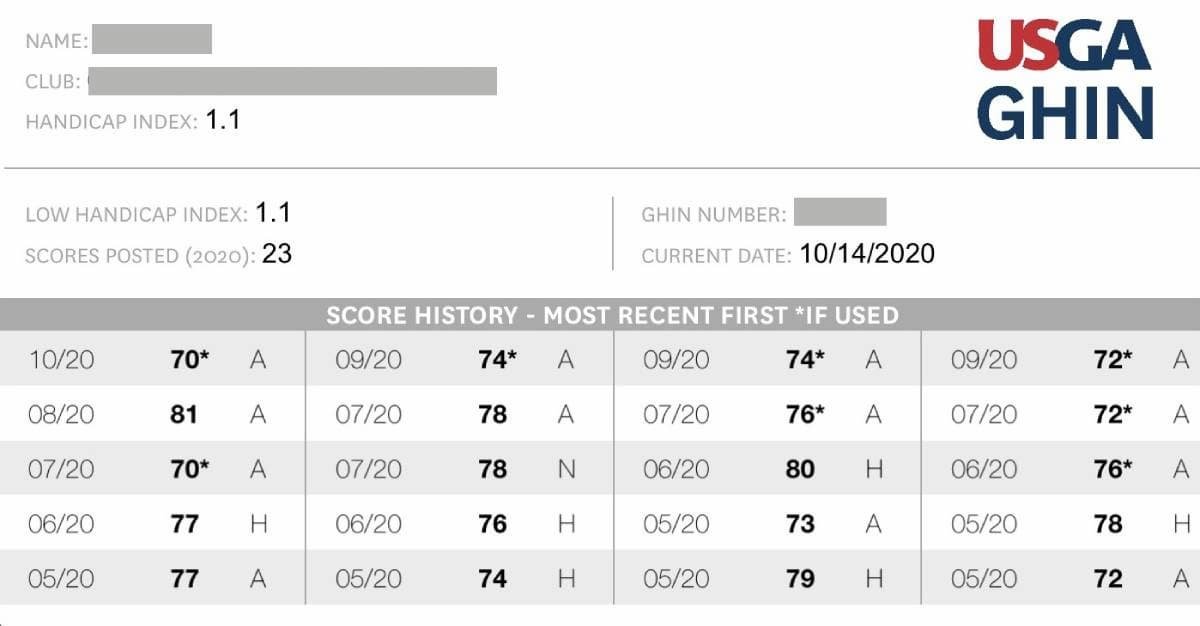
Source: USGA.org
Quick Answer
GHIN stands for Golf Handicap and Information Network. It is the system, run by the United States Golf Association, that calculates and stores your official Handicap Index. Your GHIN number is your personal ID inside that system. Once you have one, every score you post updates your index automatically, so you always carry an honest, up to date measure of your ability.
What GHIN Actually Is
Think of GHIN as the national scoreboard for recreational golfers. It is a database that holds millions of golfers and their scores, and it runs the math that turns those scores into a single number that travels with you from course to course.
That number is your Handicap Index, and it is the thing that lets a 20 handicap and a 6 handicap play a genuinely fair match against each other. Without a shared system, every club would calculate ability differently and no two numbers would mean the same thing. GHIN is what keeps everyone speaking the same language.
And once you can see your number, the natural urge is to move it. The fastest way to do that is rarely more distance. It is cutting out the mistakes that quietly inflate your score, which we cover in the seven swing mistakes that are quietly destroying your game.
How the System Works, Step by Step
The mechanics behind GHIN are handled for you, but it helps to understand what is happening under the surface.
First, you play a round and record your score hole by hole. If reading all the columns and abbreviations on the card still trips you up, our walkthrough on how to read a golf scorecard covers every box on the card.
Second, you post that score into the GHIN system, usually through the official app or your club. GHIN then adjusts the raw number based on the difficulty of the course you played, using two ratings that come attached to every set of tees.
Third, the system takes your best recent rounds, not your average, and blends them into your Handicap Index. This is why one bad day rarely wrecks your number. GHIN is designed to reflect your potential on a good day, not punish you for a rough one.
Finally, when you show up to play a specific course, your portable index converts into a Course Handicap for that exact set of tees. That is the number of strokes you actually receive on the day.
Why a GHIN Number Is Worth Having
Plenty of golfers play for years without one, so it is fair to ask what you gain.
You gain a true measure of progress. Feelings lie. You will swear you are playing better or worse than you actually are, and only a tracked index tells you the truth over time.
You gain access to real competition. Club events, member tournaments, and friendly matches with strokes all assume you have an index. Without one you are often on the outside looking in.
You gain motivation that sticks. Watching a number move, even slowly, is one of the most reliable ways to stay engaged with your improvement. When you start applying smarter course decisions, like the ones in The 90 Percent Rule, a tracked index is what proves those changes are working.
How to Get Your Own GHIN
Getting set up is easier than most people expect. In almost every case you obtain a GHIN number by joining a golf club or an association that is authorized to issue one. That club does not have to be an exclusive country club. Many public courses, online clubs, and state golf associations offer memberships specifically so recreational players can carry an official index.
Once you join, you receive your number, download the app, and start posting scores. From that point on the system does the heavy lifting.
Common Questions About GHIN
Does one terrible round ruin my index? No. The system uses your better recent scores, so a single blow up round has limited effect.
How many scores do I need before I have an index? You can establish an index after posting a small number of rounds, and it becomes more accurate as you add more.
Do I have to play full 18 hole rounds? No. Nine hole scores can be posted and combined, which is helpful for players who often get out for a quick nine.
The Bottom Line
GHIN is not a barrier reserved for serious players. It is a tool built for every golfer who wants an honest picture of their game and a fair way to compete. Getting a number is quick, posting scores becomes second nature, and the payoff is a clear, trustworthy view of how you are actually improving.
Once you have your index, the next natural step is giving it something to reward. The single most reliable way to start dropping strokes is smarter decision making on the course, which is exactly what we lay out in The 90 Percent Rule.