Golf Handicap Explained: The Truth About What It Really Means
A golf handicap is not your average score. It is a fair, potential based number that follows your best rounds and helps you compete with anyone. Here is how it works, how it is calculated, and how to lower yours.
Few things in golf sound more intimidating to a newer player than the handicap. It gets thrown around in clubhouses and group chats as if everyone was born understanding it, and the math behind it has a reputation for being impossibly complicated.
Here is the truth. The concept is simple, the math is mostly done for you, and once you understand your handicap you will never look at a scorecard the same way again. Let us clear it up for good.
Quick Answer
A golf handicap is a number that represents your playing ability. The lower the number, the better the player. Its real purpose is fairness. A handicap lets golfers of completely different skill levels play a genuinely competitive match by giving the weaker player a set number of extra strokes. Your official version is called a Handicap Index, and it is calculated from your recent scores relative to the difficulty of the courses you played, following the official USGA Handicap System.
What a Golf Handicap Really Measures
The most common misunderstanding is that your handicap is your average score. It is not. Your handicap is closer to a measure of your potential, based on your better recent rounds rather than all of them.
This matters because it means your handicap reflects what you are capable of on a good day, not what you shoot when everything falls apart. A golfer with a handicap of 15 is not someone who always shoots 15 over par. They are someone whose good rounds land around there.
Because it is built on potential, your handicap is a fairer and more stable measure of ability than a simple average would be. It also means the number rewards genuine improvement rather than punishing you for the occasional disaster.
How the Calculation Actually Works
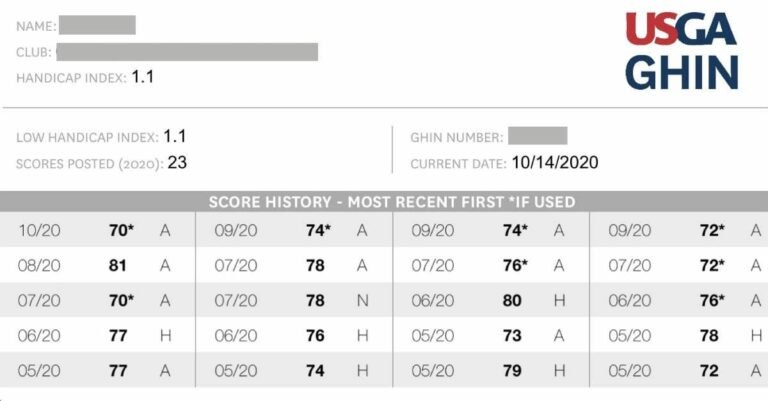
You will almost never do this math by hand, because the GHIN system does it automatically the moment you post a score. But understanding the logic helps the whole thing click.
Every score you post gets adjusted for the difficulty of the course and tees you played. This is where two numbers come in. The Course Rating estimates what a strong golfer would shoot, and the Slope Rating estimates how much harder the course plays for an average golfer. Together they let the system compare a round played on a brutal course to a round played on an easy one, fairly.
That adjustment produces a Score Differential for each round. The system then takes a set number of your best recent differentials, averages them, and that average becomes your Handicap Index.
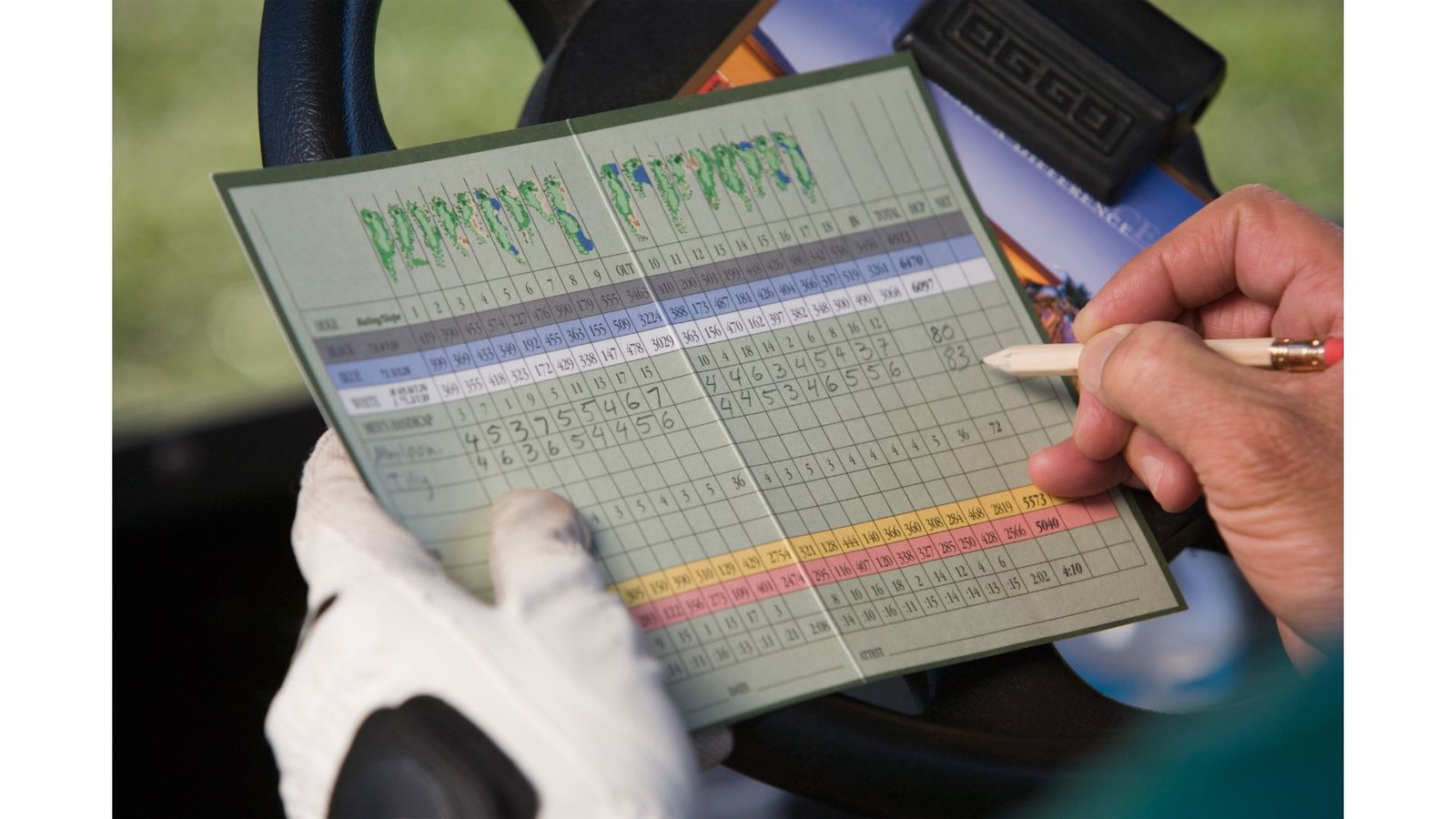
To even produce those differentials, you first have to post accurate scores, which means actually understanding your card. If the columns still confuse you, our guide on how to read a golf scorecard makes sure the number you post is correct in the first place.

Index Versus Course Handicap
One point trips up almost everyone, so it is worth stating plainly. Your Handicap Index is portable. It travels with you and stays the same regardless of where you play.
Your Course Handicap is what that index becomes at a specific course, from a specific set of tees, on the day you tee it up. A tougher course gives you more strokes, an easier one gives you fewer. You use your index to look up your Course Handicap before a round, and that is the number of strokes you actually receive.

What Counts as a Good Golf Handicap
This is the question everyone secretly wants answered, so here is an honest frame rather than a single magic number.
A brand new golfer who is still learning will often carry a high handicap, and that is completely normal. Breaking into the double digits, meaning a handicap under 20, is a real milestone that puts you ahead of a large share of recreational players. Reaching single digits, a handicap under 10, marks a genuinely accomplished golfer.
The most useful comparison is not other people. It is your own number six months ago. A handicap that is trending down, even slowly, is the clearest proof that your practice and your on course decisions are working.
How to Lower Your Golf Handicap
Since the number rewards your better rounds, the fastest way to move it is to raise your floor and make your good rounds more common. That rarely comes from adding distance. It comes from eliminating disasters.
Cutting out blow up holes does more for your handicap than any other single thing, and that is largely a decision making skill. Playing smarter, safer lines is exactly the philosophy behind The 90 Percent Rule, and tightening up your ball striking with our golf swing tips removes the wild misses that lead to those wrecked holes.
Your golf handicap is not a mysterious verdict on your worth as a player. It is a fair, potential based measure of your ability that lets you compete with anyone and track your own progress honestly. The math is handled for you, the concept is simple, and the number gives you something priceless. A truthful mirror of where your game actually stands.
The Bottom Line
A golf handicap only feels complicated from the outside. Once you know it comes from your Handicap Index, that it adjusts to whatever course and tees you play, and that it rewards your better rounds instead of punishing your worst ones, the whole system makes sense. It is simply a fair way to measure your potential and to prove, round after round, whether your game is actually improving.
That also means the number is never fixed. Post honest scores, work on cutting out blow up holes, and your index will move on its own. If you do not have an official number yet, the next step is straightforward. Read What Is GHIN to learn how to get one and start tracking your game for real.