Best Golf Rangefinders and GPS Watches (2026)
Tired of guessing yardages? Here are 6 rangefinders and GPS watches that actually get you the number, from budget picks to the one tour pros trust most.
You are standing 160 yards out, maybe 150, and for the first time you are not guessing. Everyone else in your group is still eyeing the flag and doing the math in their head. Golf rangefinders and GPS watches hand you the one thing golf rarely gives you for free: the exact number before you commit to the shot, the same certainty the low-handicap players in your group already play with.
Red Crown Golf participates in the Amazon Associates program. If you buy through the links on this page we may earn a small commission at no extra cost to you. It does not change what we recommend.
On This Page
Golf Rangefinders or GPS Watch? How They Differ
A laser rangefinder points at something (usually the flag) and gives you an exact distance to that single point, accurate to a yard or less. It needs a clear line of sight and it does one job extremely well. A GPS watch uses preloaded satellite maps of the course instead. As a result, it can give you distances to the front, center, and back of the green, plus hazards and layup points, even when you cannot see the flag at all. Most Garmin Approach watches also double as an everyday smartwatch and include their course maps for free, with no subscription and no extra app to open mid round.
Neither one is more legitimate than the other. Tour pros and top amateurs use laser rangefinders almost exclusively during practice rounds because pinpoint accuracy to the pin is what they are paid to have. Recreational golfers often prefer a GPS watch because it needs no aiming, works through trees, and keeps both hands free on the cart or the walk up the fairway. If you want the shortest path to playing with real numbers instead of guesses, both golf rangefinders and GPS watches get you there. The six picks below cover both categories, plus one hybrid option near the end that blends the two.
Quick Comparison Table
| Device | Type | Price | Best For |
|---|---|---|---|
| Bushnell Tour V6 Shift | Rangefinder | ~$350 | Best overall rangefinder |
| Bushnell Pro X3+ | Rangefinder | ~$530 | Tour level, no compromises |
| Callaway 300 Pro | Rangefinder | ~$200 | Best budget rangefinder |
| Garmin Approach S44 | GPS watch | ~$300 | Best overall GPS watch |
| Garmin Approach S12 | GPS watch | ~$200 | Best budget GPS watch |
| Garmin Approach Z30 | Hybrid | ~$490 | Laser accuracy plus GPS hole data |
1. Bushnell Tour V6 Shift
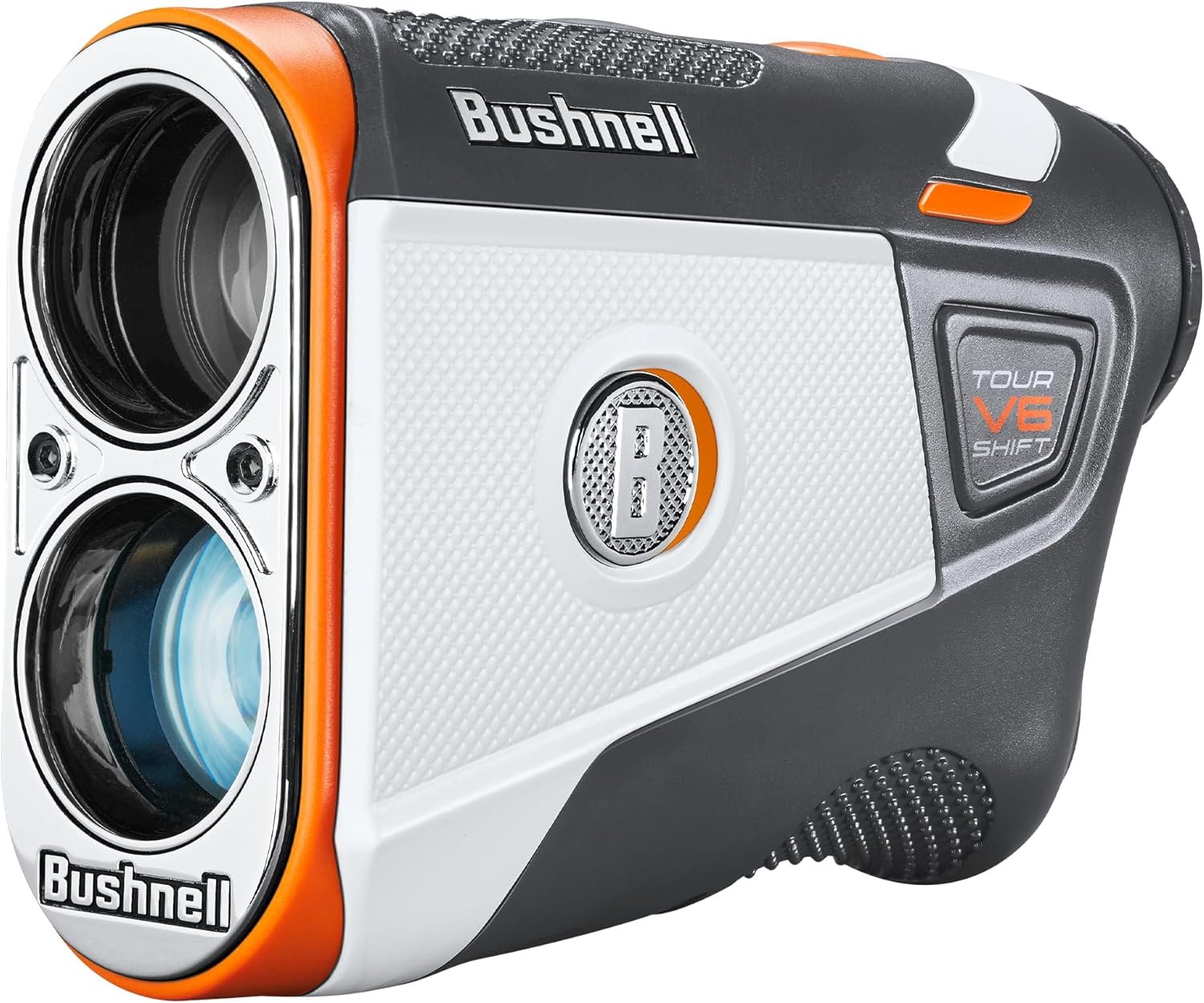
When tour pros are actually allowed to use a rangefinder, this is the brand almost all of them reach for. Independent counts at the last several Open Championships have put Bushnell’s share of the field north of 95 percent, year after year, which is not a marketing claim, it is a survey of what professionals put in their own bags when no one is telling them what to use. Buying one is a way of trusting the same name the best players in the world trust to get their numbers right.
The V6 Shift ranges up to 1,300 yards and locks onto the flag with a vibration you can feel through your hand. It also includes a slope switch you can turn fully off for tournament rounds (more on why that matters below). It is waterproof, comes with a magnetic cart mount, and currently holds a 4.8 out of 5 rating from over 600 buyers, with more than 1,000 sold in the past month alone.
~$349.99
2. Bushnell Pro X3+
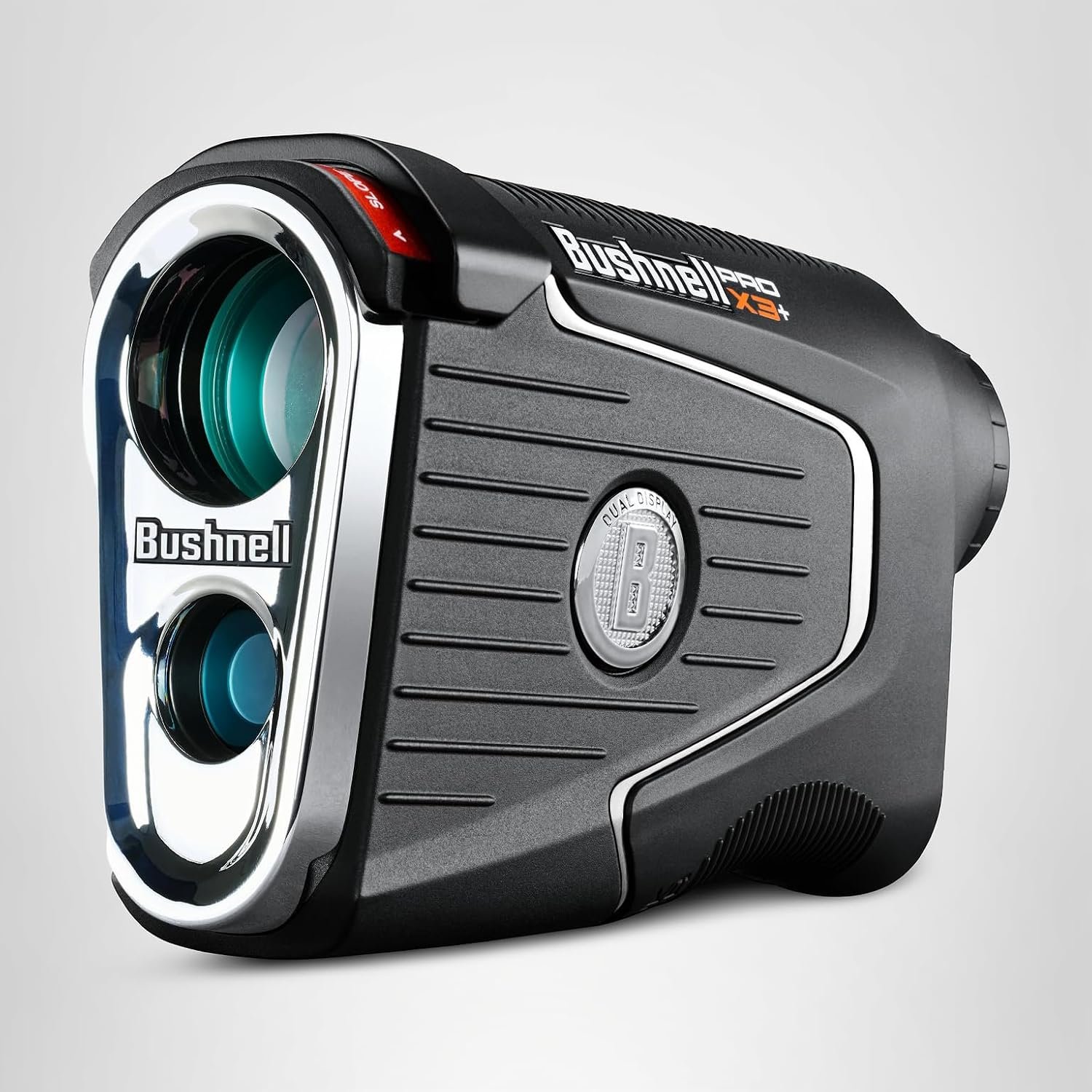
Some golfers do not want to think about their equipment again for the next decade. They want the top of the line once, and they want to know there is nothing better a few hundred dollars up from where they landed. The Pro X3+ is Bushnell’s flagship for exactly that buyer, built on the same tour trusted brand as the V6 Shift above but with wind speed compensation added on top of slope and elevation, a dual display, and 7X magnification for picking a flag out of a crowded green from well over 300 yards away.
It carries a 4.3 out of 5 rating and roughly 200 units sold per month. It is priced higher than the V6 Shift, but that reflects a genuine step up in glass quality and feature count, not just the badge on the side.
~$529.98
3. Callaway 300 Pro
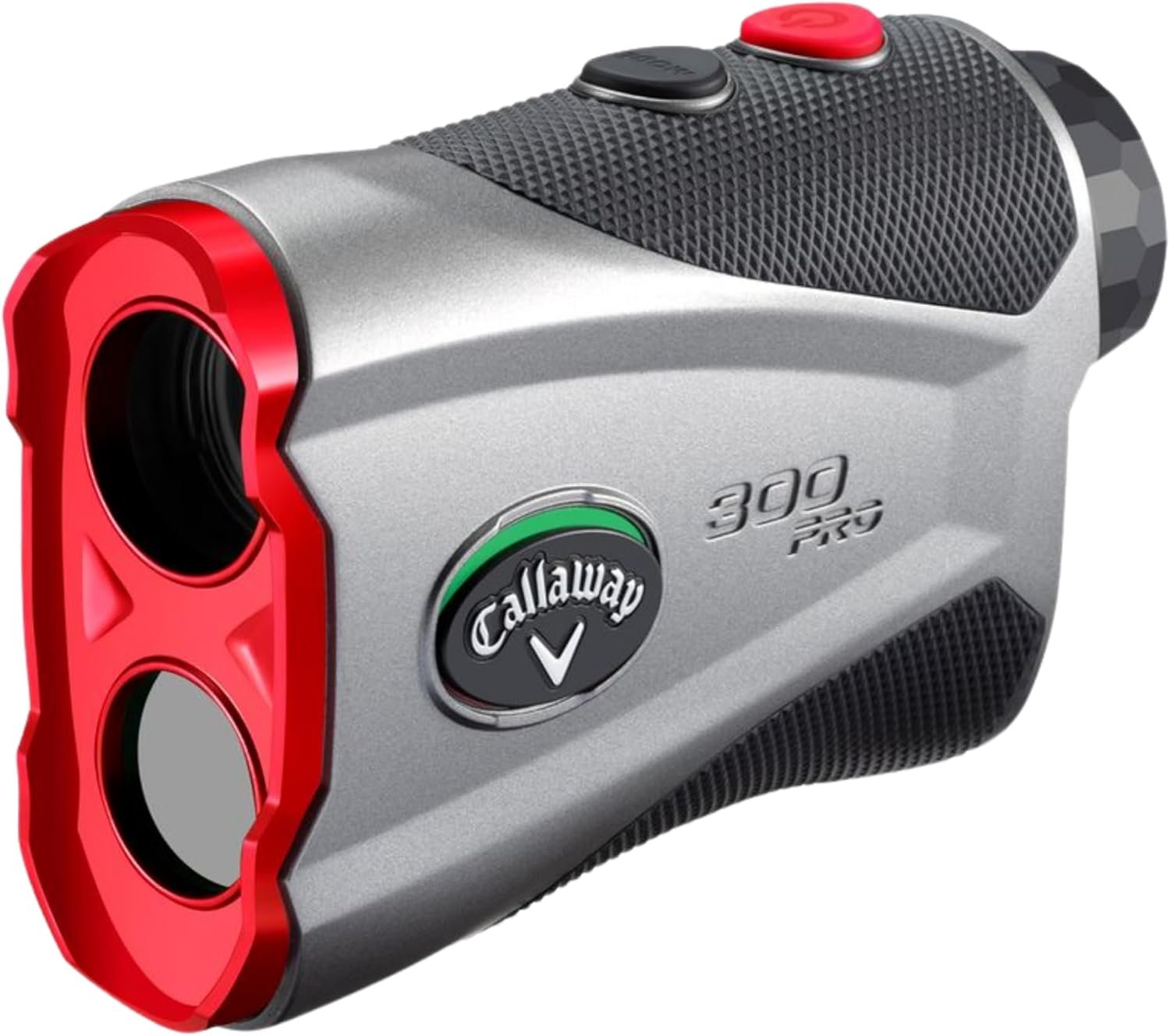
You do not need a tour budget to stop guessing yardages. Over 12,000 golfers have rated the Callaway 300 Pro, and more than 3,000 people are buying it every single month. That makes it the single most purchased rangefinder on this entire list by a wide margin. When that many golfers have already made the same decision and are still buying it years after release, you are not gambling on an unknown. Instead, you are joining a choice that has already been tested at scale.
It includes an external slope switch, a clean single-lens sight picture, and a 4.7 out of 5 rating, all for a little over a third of the price of the flagship Bushnell above. If your budget is the main obstacle standing between you and playing with real numbers, this is the one that removes it.
~$200.49
4. Garmin Approach S44
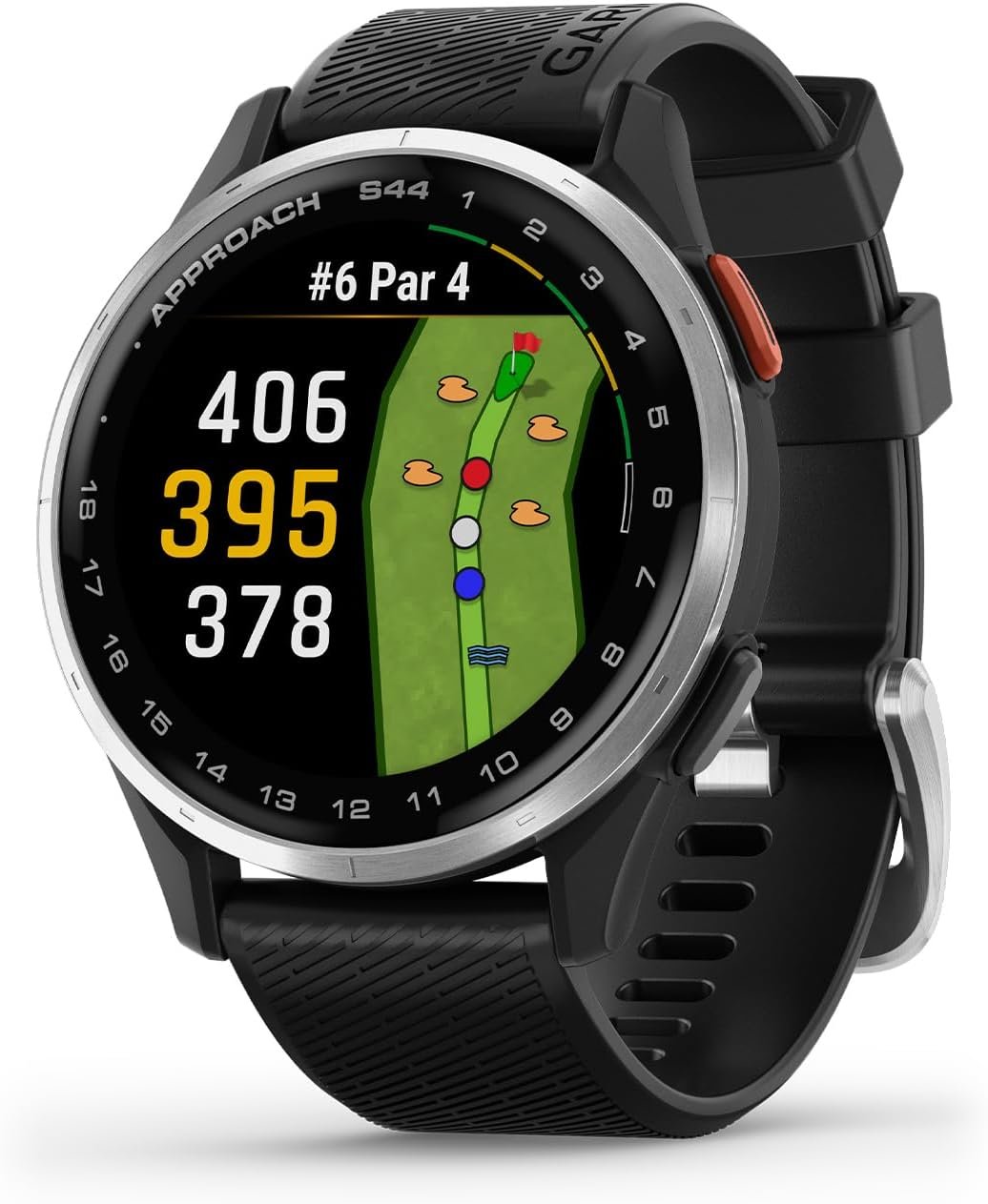
There is a specific kind of relief in not having to reach for anything. You glance at your wrist walking up to your ball and the number is already there, front, center, and back of the green, no button to aim, no case to dig out of your bag. Golfers who switch from a rangefinder to the S44 consistently describe the same thing: club selection stops being a small moment of friction before every shot and just becomes something you already know.
It runs on an AMOLED display, comes preloaded with more than 42,000 courses worldwide at no extra subscription cost, and works as a normal smartwatch the rest of the week with smart notifications. The watch holds a 4.4 out of 5 rating from over 500 buyers, with roughly 400 sold per month.
~$299.99
5. Garmin Approach S12
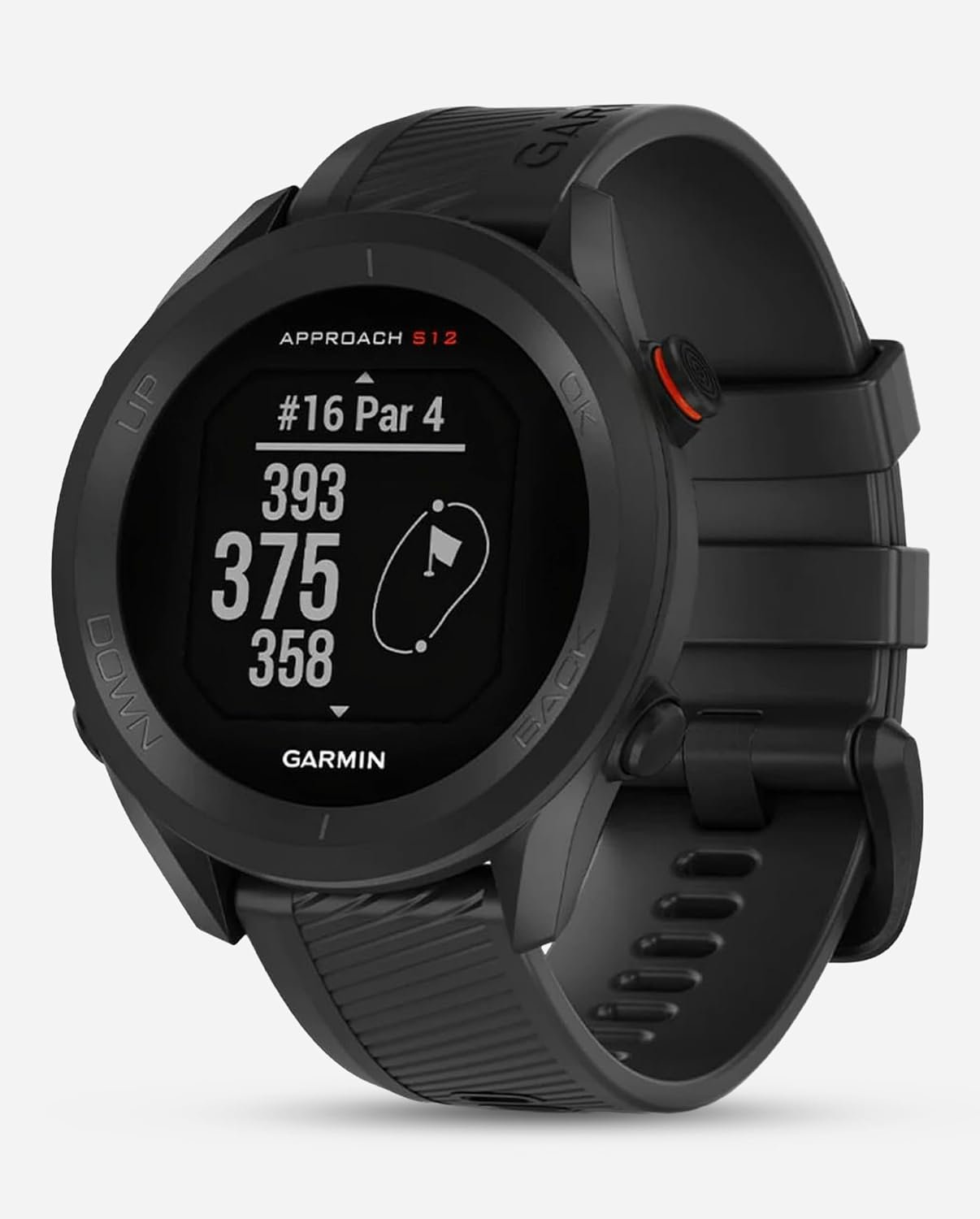
Not everyone wants to learn a new gadget. Some golfers just want the number on their wrist without a manual, a companion app they have to configure, or a feature list they will never touch. The S12 is built for that golfer specifically: press the button, it finds the course automatically, and it shows front, center, and back distances in large, easy to read numbers. Nothing about it asks you to become more of a tech person than you already are.
It comes preloaded with more than 42,000 courses and needs no subscription, ever. With over 3,100 ratings and 500 or more sold every month, it is the highest volume seller of any device on this list, which tells you how many golfers are choosing simple over feature heavy.
~$199.99
6. Garmin Approach Z30
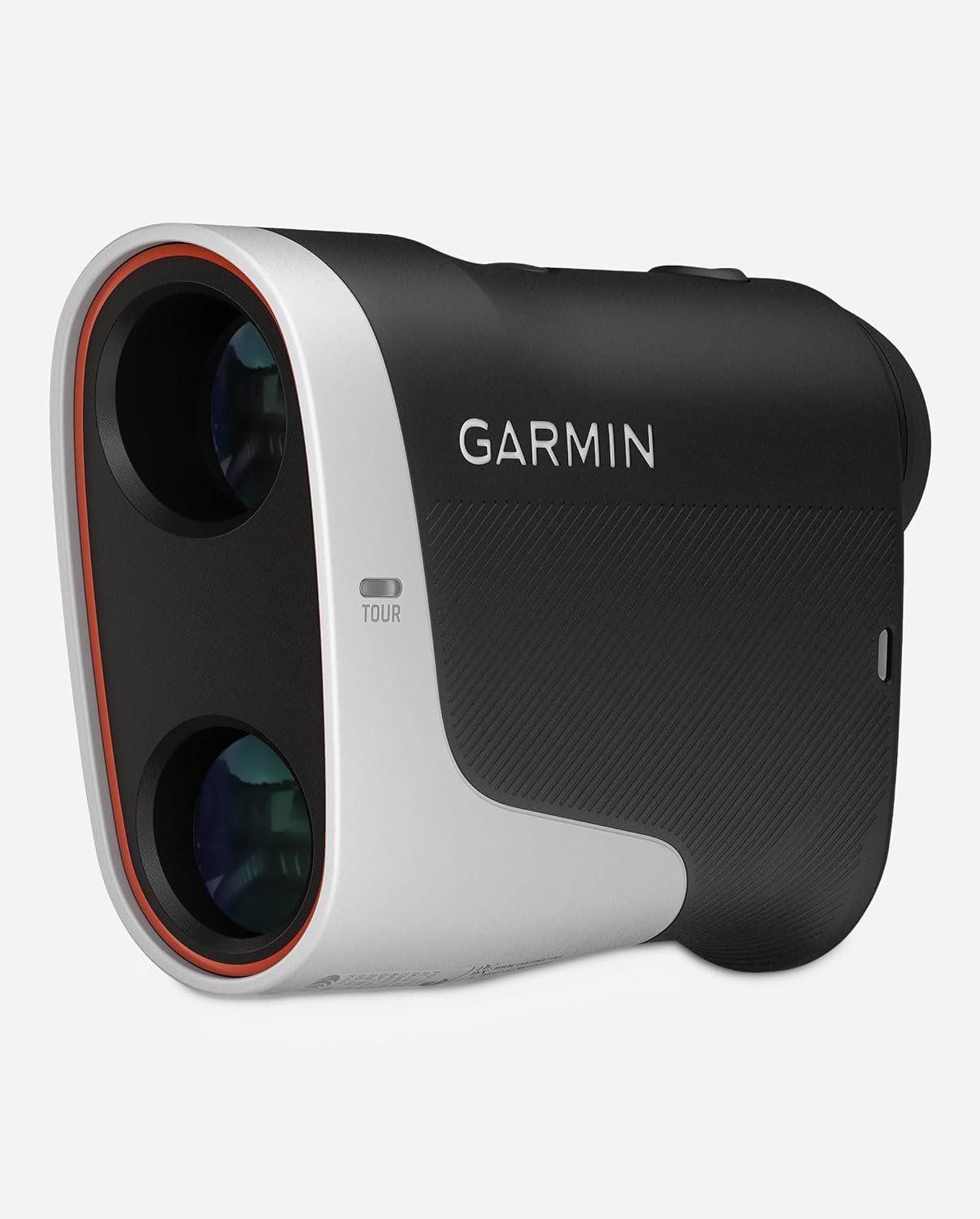
If you read this whole list and still cannot decide between a laser and a GPS watch, that is exactly who Garmin built the Z30 for. It is a handheld laser rangefinder with GPS built directly into the display, so you get an exact locked distance to the flag when you have a clear line of sight, and a full hole layout overlay when you do not. It can also send its readings straight to a compatible Garmin golf watch on your wrist.
You give up nothing by not choosing between categories, which is its entire appeal. It ranges up to 400 yards, holds a 4.6 out of 5 rating, and around 100 units sell every month at its higher, do everything price point.
~$489.99
How to Choose
Start with how you play. If you play competitive rounds or post scores for handicap, lean toward one of the golf rangefinders on this list with a slope lock, since a GPS watch never raises the question in the first place. If you play mostly casual rounds and want one less thing to hold, a GPS watch removes the aiming step entirely and works even when the flag is hidden behind a bunker or a tree.
Then set a budget and stay close to it. The jump from the Callaway 300 Pro to the Bushnell Pro X3+ buys you more magnification, a dual display, and wind reading. Those extras matter most once you are already playing consistently. Most golfers get the full benefit of this category at the middle price points on this list, not the top of it.
The Slope Mistake That Can Cost You a Penalty
Under the Rules of Golf, a device that only measures straight line distance is allowed in almost every competition. A device that also measures slope, meaning it adjusts the yardage for uphill or downhill lies, is a different story. Using the slope function during a round played under the standard local rule is a breach, even if you only check it once out of habit. In fact, this single point causes more rules confusion among club golfers than almost anything else in the bag.
The good news is that every one of the golf rangefinders on this list, including the budget Callaway 300 Pro, has a physical or software switch that locks the slope function off. That way, you and anyone you are playing against can see it is disabled. If you play in any club competition, tournament, or round you plan to post for handicap, get in the habit of checking that switch before you tee off. It takes three seconds and it removes any doubt.
FAQ
Is a golf rangefinder or a GPS watch more accurate?
A laser rangefinder is more precise for a single point like the flag, typically accurate to within a yard. A GPS watch is accurate to within a few yards but gives you distances to multiple points on the hole at once, including ones you cannot see.
Do I need a subscription for a golf GPS watch?
Garmin’s Approach watches, including the S44 and S12 above, come with preloaded course maps and free lifetime updates to that course database. No ongoing subscription is required to use the core distance features.
Are slope rangefinders legal in tournaments?
The golf rangefinder itself is legal to carry. Using the slope adjustment feature during a round governed by the standard local rule is not, so look for a model with a slope lock and switch it off before your round.
Can I use a rangefinder and a GPS watch together?
Yes, and plenty of golfers do, using the watch for a quick overall read of the hole and the rangefinder for a precise number once they are close enough to see the flag.
What is the difference between yards to the flag and yards to the green?
Yards to the flag is the exact distance to where the pin is cut that day, which changes daily. By contrast, yards to the green usually refers to the front, center, or back edge, which stays fixed and is what most GPS watches show by default.
Which Should You Buy?
Final Verdict
If you want the simplest, most trusted upgrade from guessing yardages, buy the Bushnell Tour V6 Shift. It is the same brand the pros overwhelmingly choose, and it is priced in the middle of this list. Best of all, it does everything most golfers will ever ask of one of the best golf rangefinders on the market.
If your budget is tight, the Callaway 300 Pro gets you real yardage confidence for a little over a third of the price, backed by more buyers than anything else on this page.
If you would rather glance at your wrist than hold a device, the Garmin Approach S44 is the best all around GPS watch here, and the Approach S12 is the easiest way in if you want to keep it simple and inexpensive. If you cannot choose a category at all, the Approach Z30 gives you both in one device.
Getting your yardages right is only half of playing your best golf. If the rest of your bag could use an upgrade too, our guide to the best golf balls for high handicappers and slicers is a good place to look next, whether you already own one of the golf rangefinders above or are still deciding.