Best Golf Balls for High Handicappers and Slicers (2026)
Slicing every drive? The right ball won't fix your swing, but it will curve less and cost you less. Here are 5 smart picks for high handicappers in 2026.
If you have ever watched a ball disappear into the trees and thought “there goes another one,” this guide is for you. The right ball will not fix your swing, but it can save you strokes and money while you work on it. Here are the best golf balls for high handicappers, picked for what actually helps your score.
Red Crown Golf participates in the Amazon Associates program. If you buy through the links on this page we may earn a small commission at no extra cost to you. It does not change what we recommend.
On This Page
- Can a Golf Ball Really Fix Your Slice?
- How Golf Balls Actually Differ
- Quick Comparison Table
- 1. Kirkland Signature 3 Piece
- 2. Snell PR3
- 3. Callaway Chrome Soft
- 4. Bridgestone Tour B XS
- 5. Titleist Pro V1
- How to Choose
- The Swing Speed Check
- The Biggest Golf Ball Mistake
- FAQ
- Which Ball Should You Buy?
Can a Golf Ball Really Fix Your Slice?
No golf ball will fix your slice. I want to say that before you spend a dollar, because most “best golf balls for slicers” articles will not.
A slice happens because of the relationship between your clubface and your swing path at impact. That is a swing problem. A ball cannot undo it.
What a ball can do is change how badly the slice curves. A lower spinning ball generates less sidespin, so the same swing produces a gentler curve instead of a violent banana. You are still slicing. You are just slicing into the light rough instead of the neighbor’s yard. That is a real, useful difference. It is not a fix.
Anyone selling you a “slice proof” ball is selling you something.
Now let’s pick a ball that fits how you actually play.
How Golf Balls Actually Differ
Every ball on this list is solving the same problem in a slightly different way, and the differences come down to three things: how many layers it has, what the cover is made of, and how much it compresses at impact.
Two piece balls, like the Kirkland Signature, pair a large core with a tough cover built for distance and durability, at the cost of feel and spin around the green. Three piece and multi layer balls add a mantle layer that lets engineers tune spin separately for the driver and the wedge, which is how balls like the Snell PR3 and Titleist Pro V1 stay long off the tee but still check up on approach shots.
Cover material matters just as much. Surlyn (also called ionomer) covers are harder and cheaper to produce, which is why budget balls use them, while urethane covers are softer and grip the grooves of a wedge for more control on short shots. Compression describes how much the ball squishes at impact: lower compression suits slower swings and transfers more energy, while higher compression needs a faster swing to perform, or you leave distance on the table.
Best Golf Balls for High Handicappers: Quick Comparison
Pick based on your real ball loss rate, not your aspirations. More on that a few sections down.
| Ball | Price / dozen | Best for | Feel |
|---|---|---|---|
| Kirkland Signature 3 Piece | ~$28 | Losing balls without losing sleep | Soft |
| Snell PR3 | ~$35 | Best performance per dollar | Soft, mid spin |
| Callaway Chrome Soft | ~$45 | Softest feel around the green | Very soft |
| Bridgestone Tour B XS | ~$55 | Distance off the tee | Firm |
| Titleist Pro V1 | ~$58 | Consistency you can trust | Premium, balanced |
1. Kirkland Signature 3 Piece: Best Golf Ball If You Lose a Lot of Balls
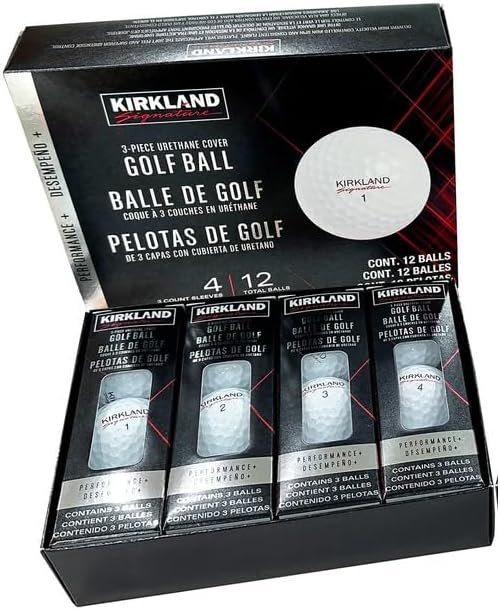
~$28 a dozen
This is the ball that makes sense for most high handicappers, and it has nothing to do with performance charts. It has to do with your head. When you tee up a $5 ball with water down the right side, part of your brain is doing math instead of swinging. That tension is real, and it makes the miss worse. A ball you are not afraid to lose is a ball you swing freely at.
The Kirkland has a urethane cover, which is the same material used on tour balls. That matters because urethane is what gives you grip on short shots. Most cheap balls use a harder cover that skids off the wedge face.
One thing to know: quality control varies a bit more than the big brands, and some golfers report an occasional inconsistent ball in the box. At roughly a third of the price of a Pro V1, that trade is easy to accept.
Buy this if: you lose two or more balls a round, or you have ever taken a practice swing and thought about the price of the ball.
2. Snell PR3: Best Value Golf Ball for High Handicappers
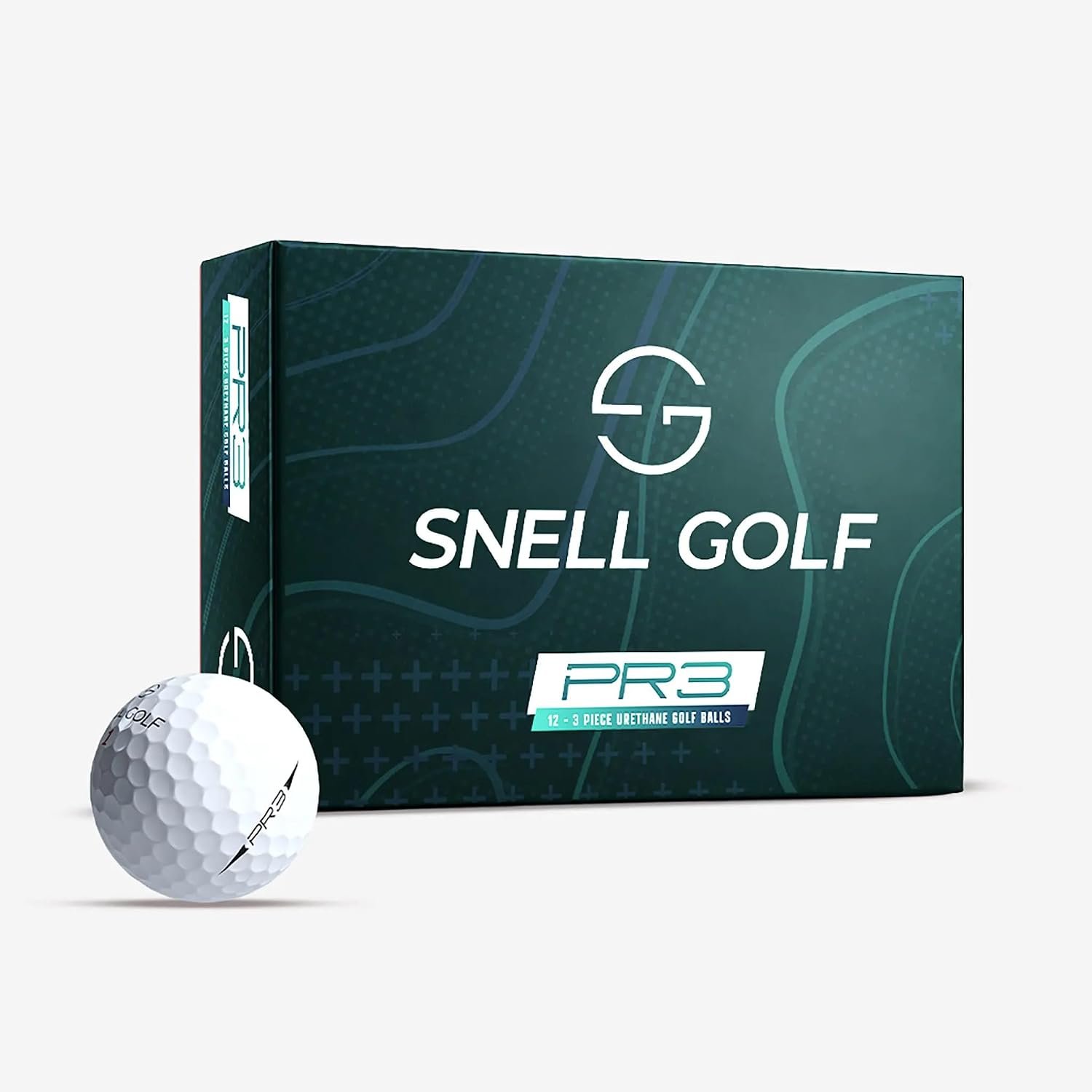
~$35 a dozen
Snell is the brand golf nerds recommend to each other. It was founded by Dean Snell, who helped design the original Titleist Pro V1 and later the TaylorMade TP5, and the whole business model is selling direct so you skip the tour marketing budget you would otherwise pay for.
The PR3 is a 3 piece urethane ball built for soft feel and mid spin. Translated: it holds greens without spinning so much off the driver that your slice gets amplified. That mid spin profile is the sweet spot for a lot of improving golfers. Very low spin balls go straighter but refuse to stop on the green. Very high spin balls check up beautifully and exaggerate every swing flaw you have off the tee. The PR3 sits between them.
The tradeoff: fewer reviews than the giants, simply because it is a smaller brand. Fewer reviews does not mean a worse ball.
Buy this if: you are past the “lose four balls a round” stage and want tour caliber performance without paying tour caliber prices.
3. Callaway Chrome Soft: Best Golf Ball for Feel Around the Green
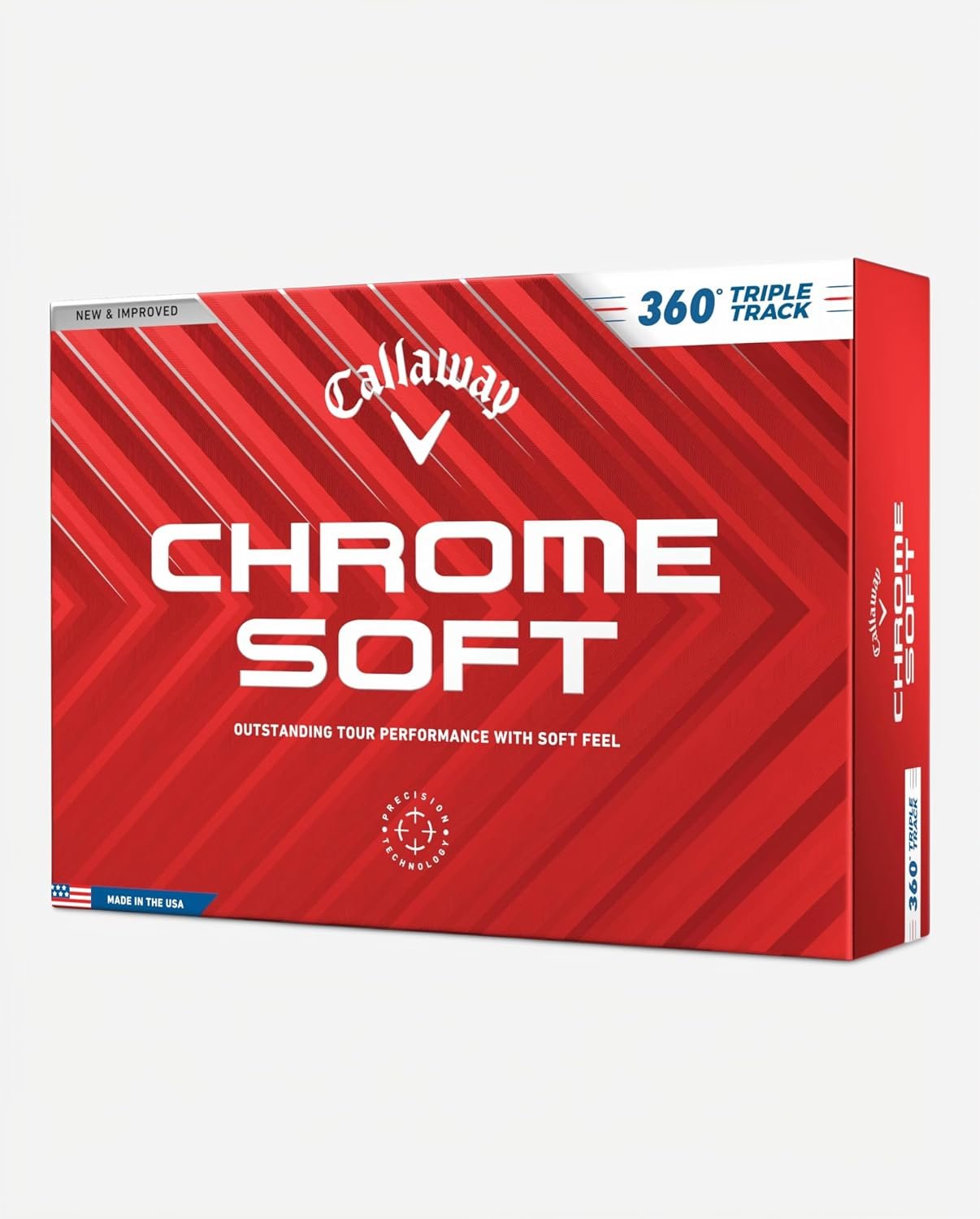
~$45 a dozen
Some golfers care about numbers. Some care about how the ball feels coming off the putter face. If you are the second kind, this is your ball.
The Chrome Soft has a lower compression than most premium balls, which means it deforms more at impact and feels noticeably softer. On a delicate chip or a downhill putt, that softness gives you feedback you can actually feel in your hands. That softness costs you a small amount of distance versus firmer options. In exchange you get more confidence on the shots that are quietly wrecking your card. Most recreational golfers lose far more strokes inside 50 yards than they lose off the tee, so that is usually a trade worth making.
It also comes in a Triple Track version with alignment lines, which genuinely helps if you struggle to aim your putter. Even a perfect line only works if you read the slope correctly, and that is exactly what our step by step guide to reading greens walks you through.
Buy this if: your short game is where you are trying to improve, and feel matters to you more than a spreadsheet.
4. Bridgestone Tour B XS: Best Golf Ball for Distance
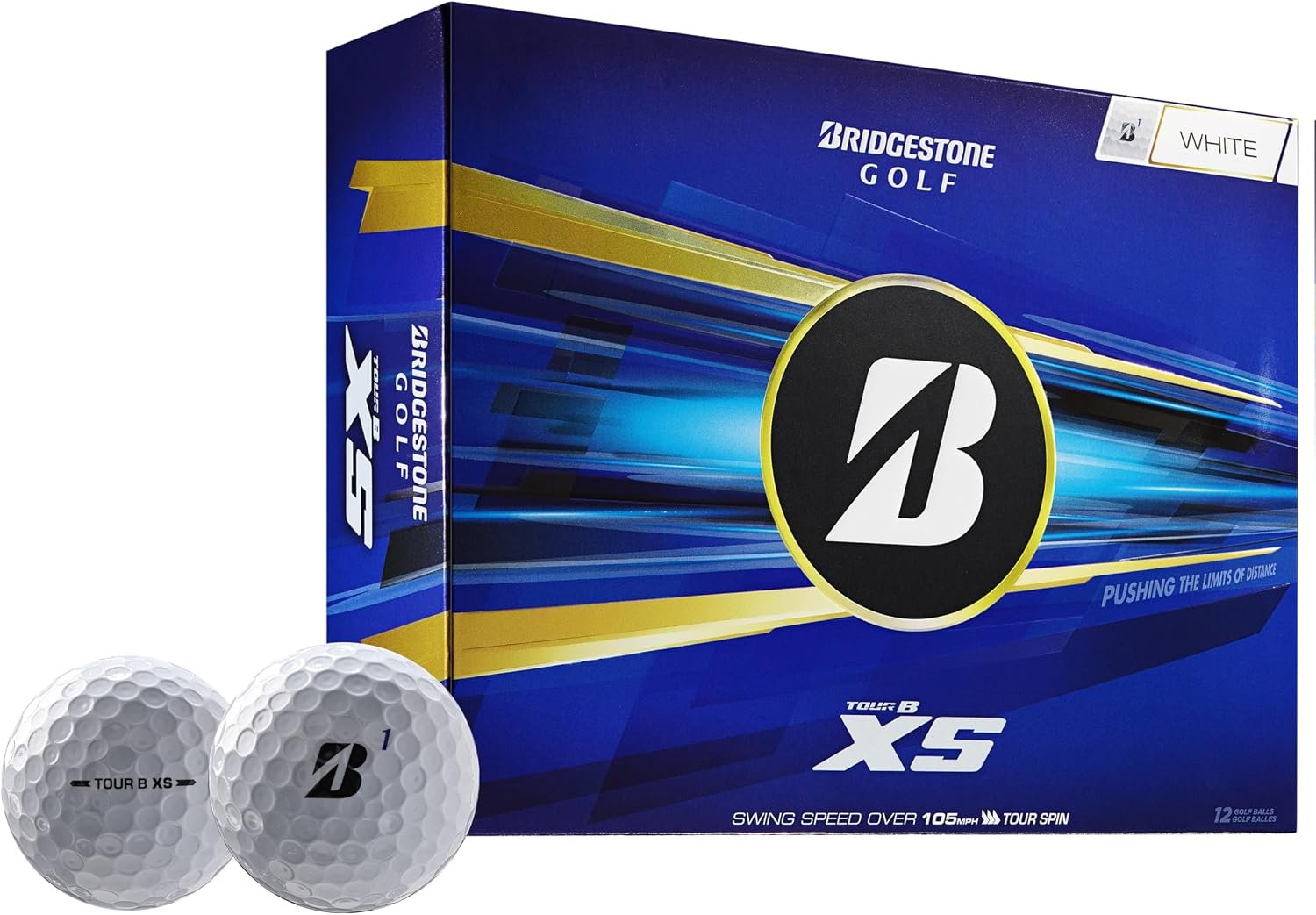
~$55 a dozen
This is the firmest ball on the list, and firm generally means fast. If your priority is getting the ball out there and you already make reasonably solid contact, the Tour B XS delivers.
One number worth knowing before you buy: Bridgestone builds the Tour B XS with higher compression specifically for swing speeds over 105 mph. If your swing is slower than that, which covers most high handicappers, look at the Tour B RXS instead. Same tour level construction, lower compression tuned for a slower swing, so you actually compress the ball properly instead of leaving distance on the table.
One caveat that most roundups skip: firmer, higher spinning balls also amplify what your swing is already doing. If you have a real slice, this ball will curve more than the Kirkland will, not less. Distance and forgiveness are pulling in opposite directions here. So this is the ball you graduate to, not the ball you start with.
Buy this if: you already know your swing speed is over 105 mph, you find the fairway most of the time, and you want more yardage, not more forgiveness.
5. Titleist Pro V1: Most Consistent Golf Ball for High Handicappers
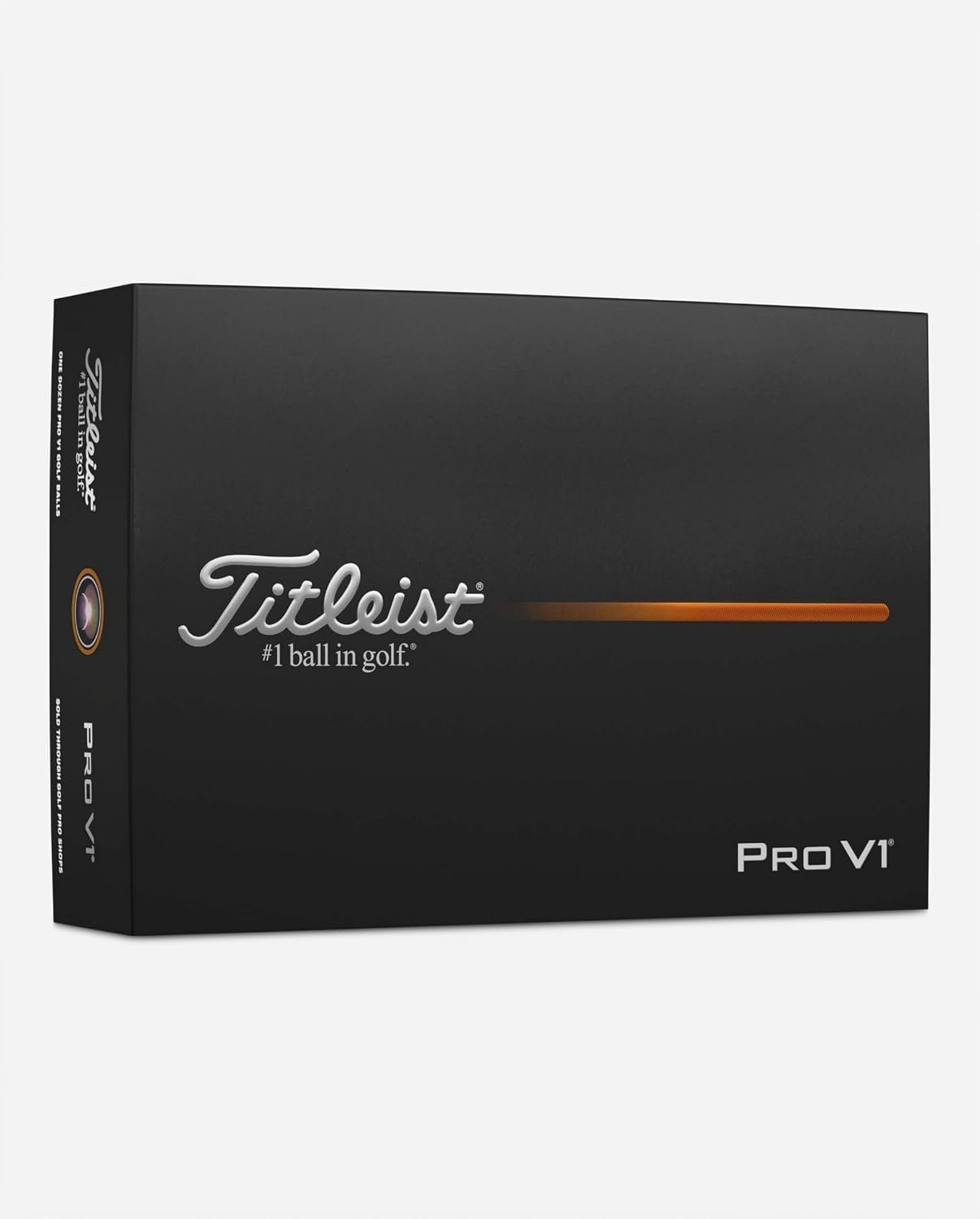
~$58 a dozen
The Pro V1 is the most played ball in golf for a simple reason: it does the same thing every single time. That consistency sounds unglamorous until you understand why it matters for improving golfers. When you are learning what your 7 iron actually does, you need one variable removed. If the ball behaves identically shot to shot, then a bad result is information about your swing. If the ball is inconsistent, you learn nothing.
That is genuinely worth paying for once you are tracking your game seriously. If you are not tracking it yet, our guide on what a GHIN handicap is explains how to start, and tracking will improve your score faster than the ball itself will.
Keep in mind: at nearly $5 a ball, losing three in a round costs more than a bucket of range balls that would actually make you better.
Buy this if: you are breaking 90 or close to it, you keep a handicap, and you rarely lose more than a ball a round.
How to Choose the Best Golf Balls for High Handicappers
Start with one simple question before anything else: how many balls did you lose in your last three rounds?
- Six or more: Kirkland Signature. Play freely, stop doing arithmetic over the water.
- Three to five: Snell PR3. Real performance, price you can absorb.
- One to two: Pro V1, Chrome Soft, or Tour B XS, depending on whether you want consistency, feel, or distance.
That is it. That is the whole decision.
The Swing Speed Check Most Buying Guides Skip
Ball loss rate gets you most of the way there, but there is a second check worth thirty seconds: your swing speed. Take the Bridgestone Tour B XS on this list. Bridgestone builds it with higher compression for swing speeds over 105 mph, closer to tour pro territory than most weekend golfers ever reach. If your swing is slower than that, the Tour B RXS is the better fit: same tour level construction, tuned lower so you actually compress the ball instead of leaving distance on the table.
This is not a knock on any ball, it is a reminder that a handicap number alone does not tell you which ball fits your swing. Two golfers with the same handicap but very different swing speeds can need different balls. You do not need a launch monitor to find out: most driving ranges and club fitting days will clock your swing speed for free in a couple of minutes. If you already know your number, use it. If you do not, treat the picks on this page as a starting point and confirm your speed before buying a dozen of anything.
The Biggest Golf Ball Mistake That Costs You Strokes
Here is the thing almost nobody does, and it costs more strokes than choosing the “wrong” ball ever will: stop switching balls mid round.
Playing a Pro V1 on the first hole, a range ball on the fourth, and whatever you found in the woods on the seventh means you never learn how any of them behave. Your 8 iron distance becomes a guess. Your chip check up becomes a coin flip.
Questions Worth Asking Before You Buy
Does a golf ball actually fix a slice? No, and any article telling you otherwise is selling you something. A slice comes from your clubface and swing path at impact, not your ball. A lower spin ball reduces how far off line that same swing ends up. Less curve, same swing flaw underneath it.
What compression golf ball is best for a slower swing speed? Generally low to mid compression, which covers most modern soft tour balls including the Callaway Chrome Soft and the Snell PR3 on this list. High compression balls need faster swings to compress properly. The Bridgestone Tour B XS above needs over 105 mph by Bridgestone’s own numbers. Below that, a softer ball transfers more energy and actually goes farther.
Is it worth buying premium golf balls if you lose several a round? Rarely. A three piece urethane ball like the Kirkland Signature gets you most of the short game feel of a Pro V1 for a fraction of the price. Save the premium ball for the rounds where you are playing well and staying away from water and trees.
How often should high handicappers replace their golf balls? Less often than you would think. A ball performs almost identically whether it is new or has ten holes on it, as long as the cover has no cuts or scuffs. Replace it when you see damage, not on a fixed number of rounds.
Does a more expensive golf ball actually help a high handicapper score lower? Less than the marketing suggests. The biggest score gains for high handicappers come from contact quality and course management, not ball selection. A better ball adds some consistency and short game control, but it will not turn a bad swing into a good one. The 90 percent rule article linked above covers where the real strokes are hiding.
Which of the Best Golf Balls for High Handicappers Should You Buy?
Final Verdict
If you slice and lose balls, buy the Kirkland Signature and spend the money you saved on a lesson. It is the cheapest ball on this list, and it is also the one we recommend most for golfers who are still losing two or more a round.
If you are past that stage, the Snell PR3 is the best value on this list, and the Titleist Pro V1 is the safest premium choice.
Out of all the best golf balls for high handicappers on this list, if you take one thing away, take this: the ball is the cheapest, smallest variable in your game. Your grip, your setup, and your course management are free to fix and worth ten times more.
Start with the swing mistakes quietly wrecking your round, and let the ball be the last thing you optimize.
If your misses feel unexplainable no matter what you try, it might genuinely be your gear rather than your swing, and our full breakdown on whether club fitting is worth it covers how to tell the difference.